









How the Unity Ecosystem is Powering the Growth of Sony’s Next-Generation Motion Capture System ”mocopi”—A Product Evolution Story and its Next Chapter
This article has been translated from the original written by Unity Technologies Japan. The original version can be found here.
https://unity3d.jp/industry/sony-mocopi/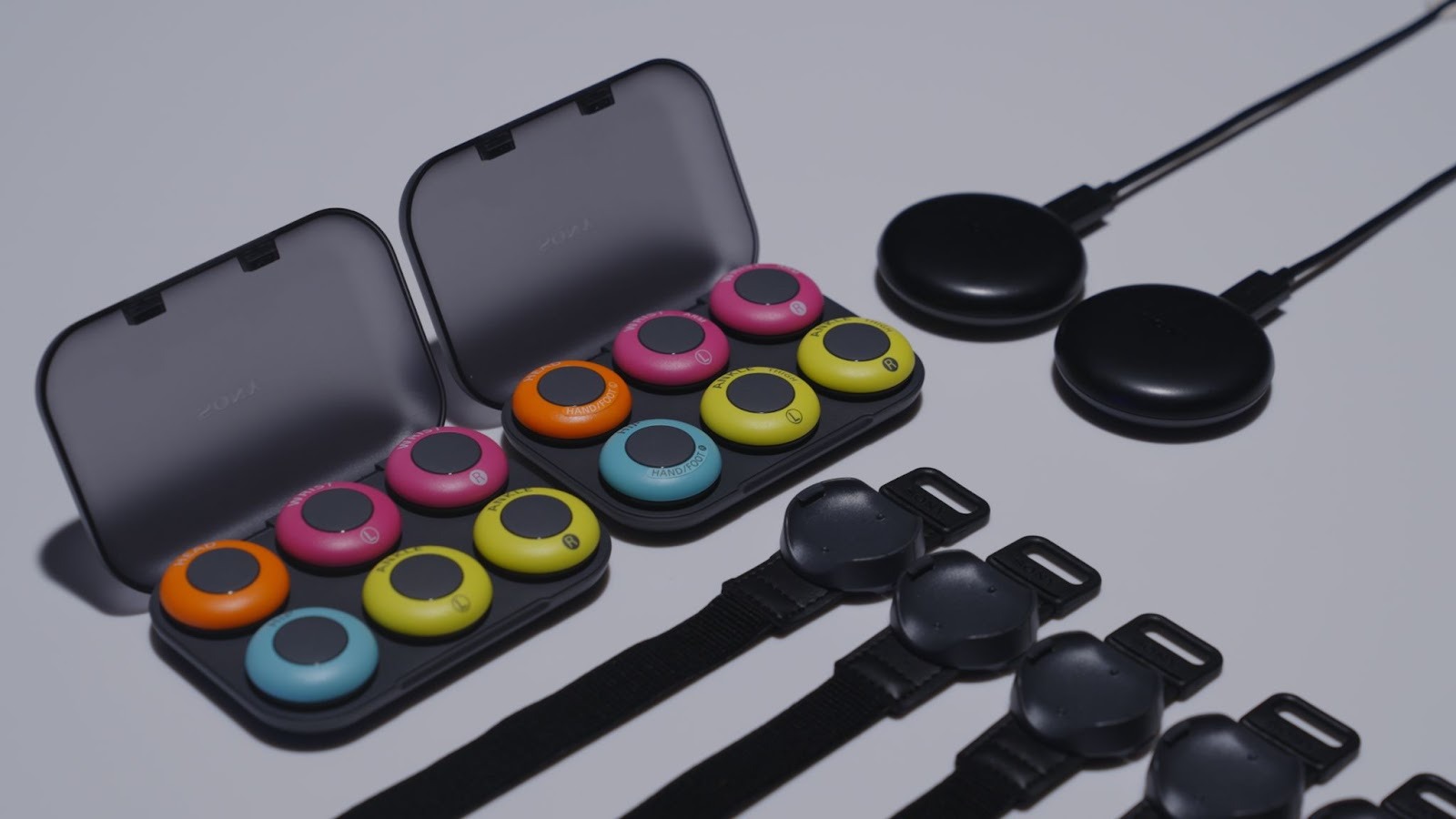
Unity boasts more than 1.3 million monthly active users worldwide. Thanks to this massive user base, many external vendors have built compatibility and integrations between their own hardware, software, and services and Unity. As a result, an ecosystem of exceptionally high value has been created for users.
The mobile motion-capture device mocopi®, released by Sony Corporation, has also achieved significant product growth through co-creation with the Unity user community.
Released in January 2023*1, mocopi is a groundbreaking device that delivers full-body tracking anywhere—outdoors, at home, or any other location—simply by attaching six compact and lightweight sensors, each measuring 1.26 inch in diameter and weighing approximately 0.28 oz, to the body and pairing them with a smartphone app*2. This innovation made a major impact on 3D artists, VTubers, and other creators and developers Behind this achievement lay Sony’s long-accumulated sensing technologies and a new development approach that involved co-creating not only with Unity as a development platform, but also with the Unity community itself.
In this interview, we spoke with Takeshi Aimi, Director of mocopi business, and Akira Sato, Development Lead. They shared in detail the story behind mocopi’s creation, why they chose Unity, how they engage with the developer community, and the path that ultimately led to open-sourcing the SDK.
*1 The release dates outside Japan vary by region. For detailed schedules, please refer to the press releases issued for each respective region.
*2 Download app at Google Play and the App Store. Network services, content, and operating system and software subject to terms and conditions and may be changed, interrupted or discontinued at any time and may require fees, registration and credit card information.
Physical Interaction: The Missing Piece in the ‘‘XR Boom”
The research, development, and commercialization efforts behind mocopi began to accelerate around 2020. As COVID-19 spread and physical movement became restricted, interest in XR technologies was rapidly increasing.
While working on XR-related technology and service development within the Sony Group, Aimi identified two major issues with the XR experiences of that time. First, although hardware such as AR glasses and head-mounted VR displays already existed, most of them were limited to providing experiences that merely allowed users to ‘view’ 3D content. Second, even when interaction was available, it was confined to experiences mediated by controllers or laser pointers.
Aimi recalls, ‘As we worked on creating experiences where users could interact with characters in 3D space, I began to feel that I wanted to step into that 3D world using my own body.
To directly map one’s physical movements onto a digital avatar, motion capture is indispensable. However, conventional motion-capture systems are highly elaborate, typically requiring numerous cameras and dedicated equipment. To make use of such systems, individuals had to visit a specialized studio, wear a special suit to record their movements, and undergo a full capture session—making the technology far from accessible for personal or casual use.
Around 2020, when the VTuber boom was beginning to emerge, individuals streaming from home were limited to using a webcam to track facial movements and map them onto their avatars. Capturing full-body motion still required traveling to a studio for every session. Aimi’s desire to change this situation—‘to make motion capture easily accessible to everyone’—became the starting point for mocopi.
Leveraging Sony’s Technological Assets Built Through the Development of Other Products

Sony’s accumulated technological assets played a critical role in realizing the vision of making motion capture easily accessible to everyone.
At the time, the R&D divisions within the Sony Group had already developed elemental technologies capable of reproducing human body movements to a certain degree simply by attaching accelerometers and gyroscopes to several points on the body. These technologies were applied in products such as the Smart Tennis Sensor and Smart Golf Sensor, which visualize and analyze a player’s form and swing when attached to tennis rackets or golf clubs. Through these development efforts, Sony’s R&D teams had accumulated substantial expertise in sensing technologies and data processing.
Having originally worked in the smartphone development division, Aimi was familiar with the computational load required to generate 3D representations of users’ movements for the Smart Tennis Sensor and Smart Golf Sensor. This led him to consider that, given the capabilities of modern smartphones, such processing could be handled on a mobile device. From there, he conceived the idea of enabling motion capture using only compact sensors and a smartphone app.
When the team created a prototype, they found that a smartphone alone was capable of handling all necessary computations. This confirmed that a large-scale, high-end setup was unnecessary, solidifying the product concept of a ‘mobile motion-capture’ solution that operates using only sensors and a smartphone.
Selecting a Development Platform with User-Created Applications in Mind
To bring this concept to life, Aimi and his team began developing the application. Reflecting on the selection of development tools, Aimi notes, ‘I believed that a game engine would be the most suitable for building applications that require 3D interaction, so from the outset we were considering a game-engine-based approach.
Among the various options, Aimi ultimately chose Unity. One reason, he explains, is that he had already used Unity in earlier XR technology development projects prior to working on mocopi. But what mattered even more, he says, were the ‘depth of the developer base’ and the ‘breadth of the ecosystem.’
‘mocopi is merely a device for capturing motion data. Its value doesn’t increase unless applications emerge that use that data to animate avatars or integrate it into games,’ Aimi emphasizes.
In other words, the intention was for a wide variety of applications to be created by users themselves—applications that would, in turn, expand the value of mocopi and broaden its user base. It was precisely this vision that led the team to select Unity, a platform widely adopted by developers.”
Selecting a Development Platform with User-Created Applications in Mind
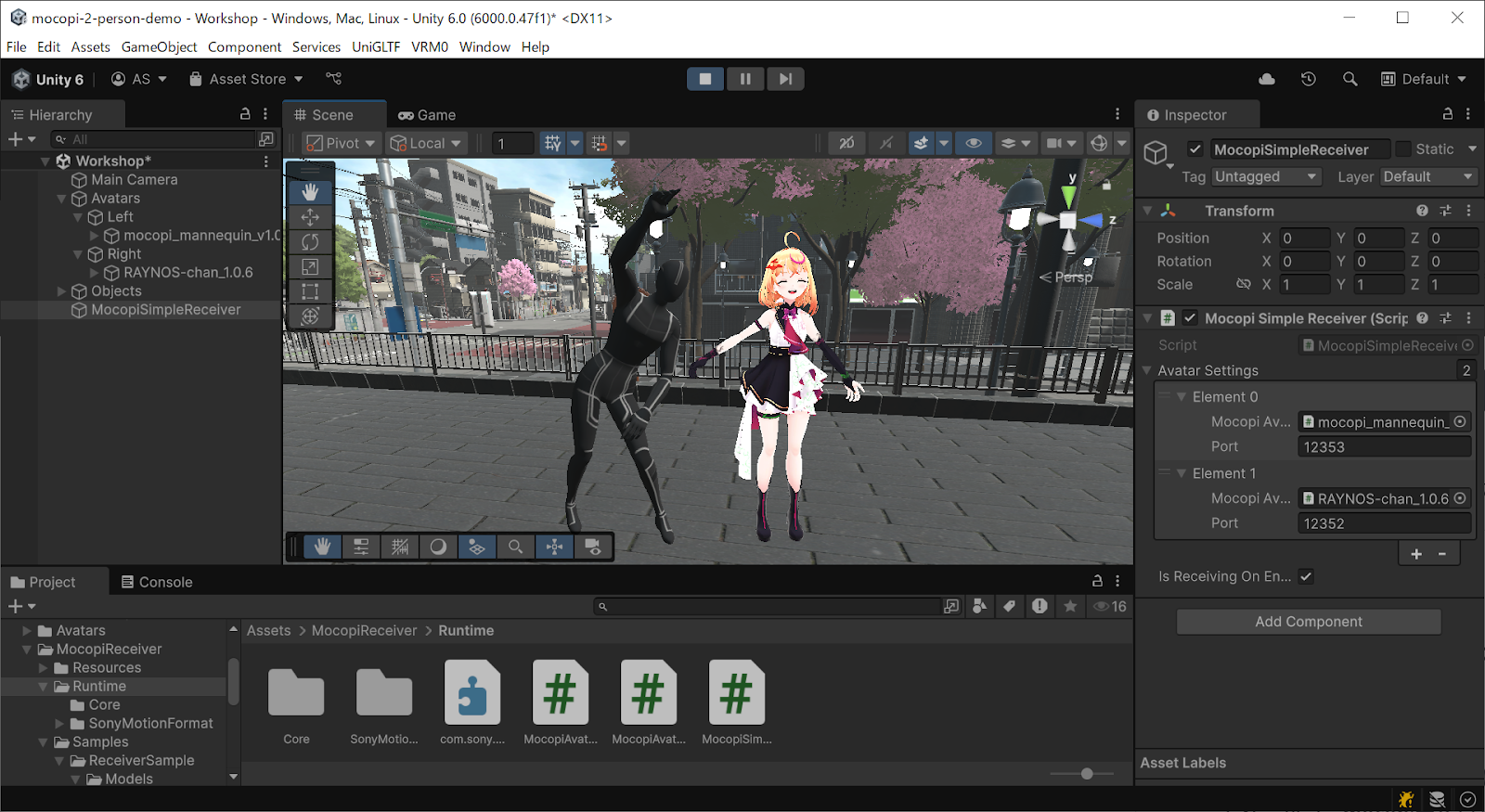
In addition to selecting Unity as the development platform, the mocopi team also leveraged Unity as part of its marketing strategy. One symbolic example of this approach was the decision to release the ‘mocopi Receiver Plugin for Unity’ roughly one month before the product’s official launch on January 20, 2023.
This plugin enables motion data transmitted from the mocopi app to be applied to avatars within Unity projects, and it was released in advance alongside an emulator capable of sending motion data on behalf of the hardware.
Aimi explains, ‘The message we wanted to send was: “The product is coming soon—go ahead and try building apps for it now.”’ As a result, even before the product was available, many users on social platforms such as Twitter (now X) were already posting, ‘I made an app compatible with mocopi.’ By the time the product launched, several independently developed apps were already supporting mocopi.
Aimi adds that one unexpected “side effect” of the early plugin release was that one of the individuals who had posted about developing such an app before launch later joined the mocopi team and continues to work with them today.
Today, mocopi offers receiver plugins for development platforms such as MotionBuilder, Maya, Unreal Engine, and Blender. The reason Unity’s receiver plugin was released first, however, was due to its strong compatibility with VRM—the humanoid 3D model file format most widely adopted in Japan and essential for mocopi.
Unity supports VRM through the UniVRM library, providing an environment in which VRM avatars can be handled with ease. According to Sato, the development lead for mocopi, ‘Another reason we prioritized the Unity plugin was that most VTuber-oriented applications are developed using Unity.
Growing the Product Together with the Community
After the product launch, the mocopi team established a developer community on Discord to expand its user base. They first invited core users—those already engaged in developing applications themselves—and gradually grew the community over time. Today, this Discord community functions not only as a channel for inquiries, but also as a space for user interaction and a forum for gathering user feedback.
Building on this foundation, the team launched user-participatory events under the name ‘mocopi Camp.’ The purpose of these events is to expand the use cases for mocopi. Participants are invited to create interactive content using the ‘mocopi Receiver Plugin for Unity.’ The first event, ‘mocopi Autumn Camp,’ was held in September 2023, with 15 users taking part and producing a variety of content.
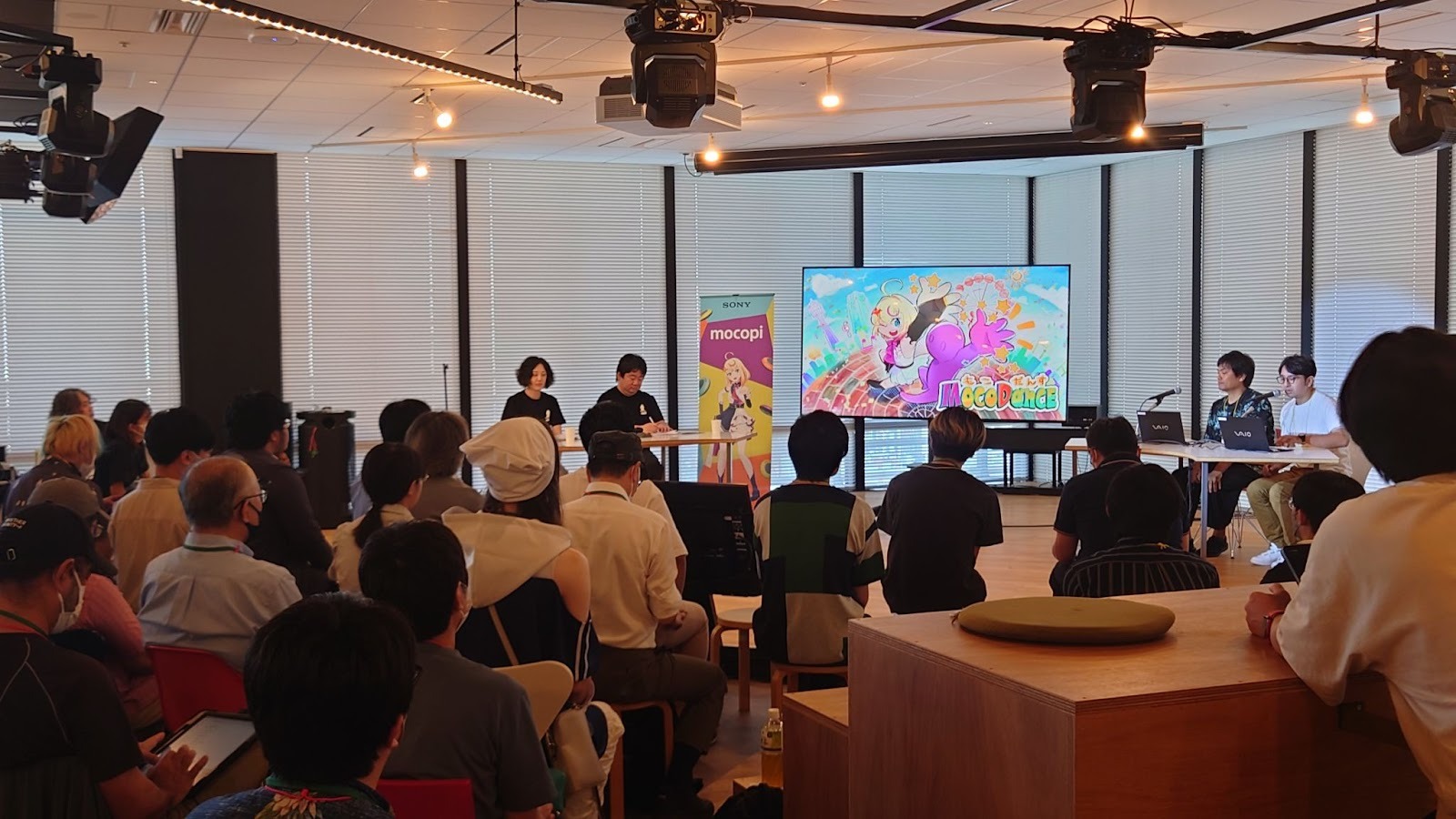
Following its positive reception, the team hosted a second event, ‘mocopi Winter Camp.’ This further energized development using the SDK, deepened understanding and awareness of the mocopi ecosystem and its developer community structure, and strengthened connections with the community.
A dedicated Discord server was initially created for event applicants, and was later opened to the public, eventually evolving into what is now known as ‘mocopi FunLab.’ Because highly motivated members drove the community from its inception, high-quality discussions emerged organically, creating an environment in which newcomers could immediately access valuable insights after the server opened to the public. As a result, the team succeeded in establishing a vibrant, sustainable community foundation.
Customer Feedback as the North Star: Major Updates Every Three Months
A defining characteristic of the mocopi development structure is its unwavering commitment to a user-first approach. Team members, including Aimi and Sato, constantly monitor X and Discord, with Aimi stating unequivocally, ‘I read every single post related to mocopi on social media.
According to Aimi, ‘Unlike consumer electronics aimed at a broad audience, mocopi is supported by a highly engaged user base belonging to a specific cultural domain. As a result, the feedback shared on social media is extremely reliable and plays a crucial role in determining development priorities.
By thoroughly incorporating user feedback, the mocopi team has maintained a fast development cadence, delivering major software updates every three months since the product’s launch. These updates extend well beyond feature additions. For example, although mocopi was initially released as a smartphone-only product, strong requests from users—such as, ‘I stream from my PC, so I want to operate it directly on PC’—led the team to develop and release a dedicated PC application. The same applies to Unity-related features: among the requests submitted by users, those that were feasible to implement were promptly developed and incorporated into Unity.
Accelerating Co-Creation Through the Open-Sourcing of the ‘mocopi Receiver Plugin for Unity
In December 2025, the development team took the step of open-sourcing the mocopi Receiver Plugin for Unity.
Although the plugin had previously allowed users to view portions of the source code upon download, certain elements—such as parts of the communication processing—had remained closed. With this open-source release, those components have now been fully disclosed.
The move also enables the team to receive Issues and Pull Requests directly on GitHub, creating a faster and more direct communication channel between users and the development team. This new structure allows developers around the world to collaborate on bug fixes that the team alone may not have noticed, as well as contribute unexpected feature enhancements—significantly expanding the scope of co-creation.
The biggest concern surrounding the open-source transition was whether the team could handle the influx of questions and requests that might arise once the source code made clear what the plugin could and could not do.
However, smoother communication within the Discord community and the establishment of internal routines for processing external feedback helped ensure the team was well prepared.
The open-source initiative begins with the widely used mocopi Receiver Plugin for Unity and the native layer responsible for deserializing motion data. After observing user reactions, the team plans to consider open-sourcing receiver plugins for other development platforms as well.
Looking ahead, Aimi expresses strong anticipation: ‘Because we have been building the same product for so long, our perspective on how mocopi can be used is inevitably biased. Through open-sourcing, I look forward to seeing surprising, completely unexpected applications—use cases that make us say, “We never imagined it could be used that way!”
How the Unity Community Drove the Adoption and Evolution of mocopi
Aimi reflects on the journey so far: ‘Releasing the mocopi Receiver Plugin for Unity early—and creating an environment in which Unity-based applications already existed at the time of launch—was extremely important for expanding our user base.
Behind mocopi’s growth—not merely as a motion-capture device but as a platform powering a wide range of 3D interactive content and evolving into an ecosystem of its own—stood the Unity community. ‘From full-scale applications developed by companies to experimental tools created by individual developers, Unity enabled an incredible diversity of use cases. In that sense, I believe mocopi is a product nurtured by the Unity community,’ Aimi says.
Sato, however, emphasizes that ‘simply implementing user requests as-is is not enough.’ He explains: ‘Whenever users express frustration or dissatisfaction, there is always a reason behind it. But if we merely add features exactly as requested, the product becomes increasingly complex and loses its direction. What truly matters is understanding the real need behind the user’s words and proposing the optimal solution on our side.’
Sato continues to engage with users directly on Discord, proposing feasible approaches and selectively prioritizing features guided by a clear product vision. This, he notes, is the essential principle when co-developing a product hand-in-hand with the user community.
Looking Ahead to the Global Stage: Driving Adoption Across Industrial, Creative, and Development Domains
mocopi is currently available in Japan, the United States, Singapore, and parts of China, but the team is now setting its sights on a truly global rollout. Its use cases also extend far beyond entertainment.
Today, mocopi is primarily used for avatar control; however, the underlying technology—capturing human motion as 3D data—has far broader potential. For example, within Sony Group factories, pilot programs are underway to visualize workers’ movements with mocopi and analyze physical workload and operational efficiency. This type of “human-motion visualization and analysis” holds significant promise for industrial applications.
Adoption is also progressing in the creative-production domain, which Sony Group prioritizes as part of its creator-support initiatives, as well as in engineering- and development-oriented fields. With these trends in mind, Aimi positions mocopi as “the first step toward advancing interaction with 3D objects.”
“Digitizing human motion and enabling interaction with objects in 3D space—both the hardware and software required for that will continue to evolve. mocopi represents the first step toward that future. A few years from now, we want people to look back and say, ‘That was where it all began.’ We remain committed to driving the product forward.”
The Role of the Unity Community in the Future Envisioned by mocopi
As Aimi and his team look toward the future they aim to realize, what role will the Unity community play?
Sato first points out that “one of the defining characteristics of the Japanese market is the sheer number of engineers who use Unity, as well as their high technical proficiency.” Drawing on extensive interactions with users on X and Discord, he further explains that the most notable trait of the Unity community is “its willingness to actively voice questions and requests.” Because users communicate proactively, the development team can more easily understand their intentions and circumstances, enabling faster product improvement.
Aimi also highlights the community’s strong inclination toward public sharing. “Unity users, in particular, tend to actively post the content they create using mocopi on social media,” he notes. These posts have played a significant role in expanding product awareness and attracting new users.
Moreover, with the open-sourcing of the “mocopi Receiver Plugin for Unity” in December 2025, the depth and breadth of communication will expand even further. In addition to natural-language exchanges through X and Discord, more direct, code-based collaboration is expected to emerge through GitHub. This development will likely accelerate interaction between users and the development team, reinforcing the Unity community’s role as a key driver of mocopi’s ongoing product evolution.

