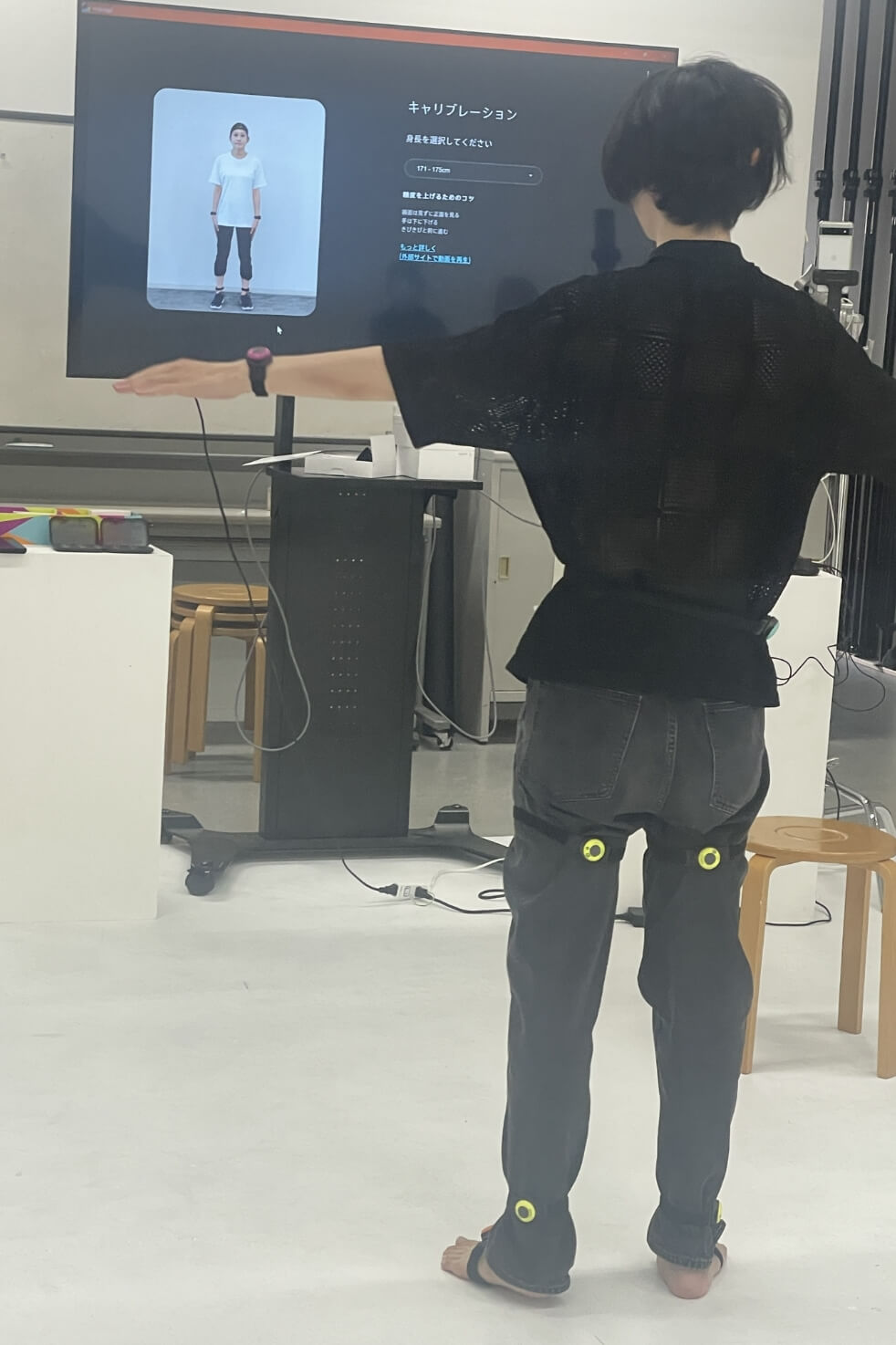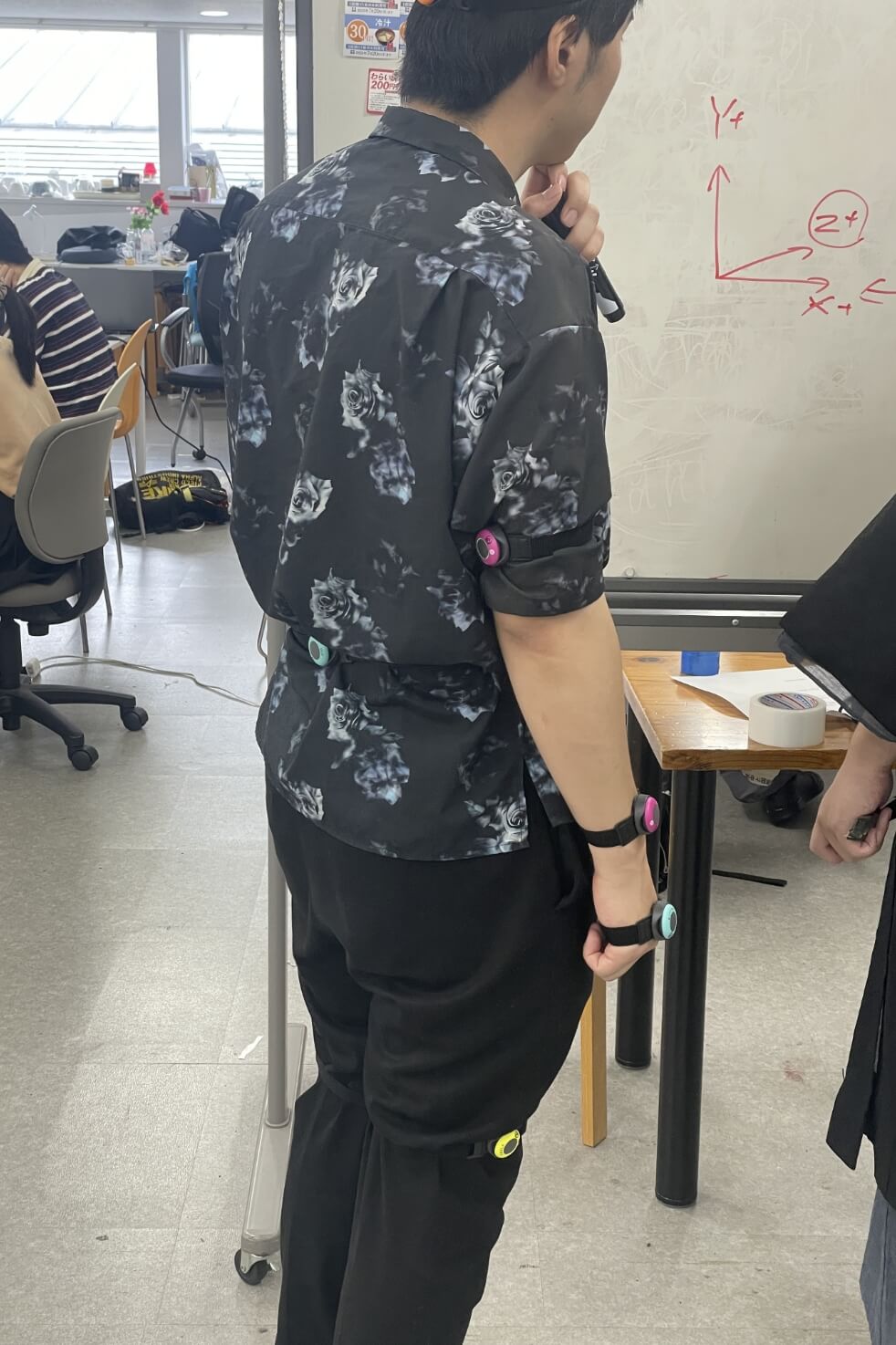




The Digital Creation Course at Kyoto Seika University has transformed motion capture recording, previously treated as a specialized process in the production environment for students studying game development and XR, into an everyday part of the creative workflow by introducing the Professional mode of Sony’s mobile motion capture system, mocopi®.
We spoke with Professors Noriko Omizo and Kazuki (Masuku) Sakamoto of Kyoto Seika University about how mocopi is being utilized in XR education and creative practice.
Bottlenecks of Motion Capture in Game and XR Production
In the past, the Digital Creation Course used an external motion capture studio, but including advance preparation and travel, recording effectively took an entire day, placing a heavy time and personnel burden on the students.
In addition, constraints related to cost and scheduling made it difficult to reshoot motion data in response to changes in ideas during production or to capture additional movements needed later. As a result, motion capture became a major bottleneck in the production workflow—particularly in an educational setting where iterative experimentation is essential.
Why mocopi?
In an educational setting, it is more important to be able to capture motion quickly and reshoot as many times as needed than to achieve the high precision of a studio-grade system. Because mocopi can be used entirely within the classroom, it has significantly lowered the barriers to production.
A key turning point in addressing these challenges was strong demand from students. Those interested in mocopi organized petitions and signature campaigns, while faculty members introduced its potential during classes. This momentum led to more concrete consideration of the system as an educational tool.
When first implemented, the system began with a six-sensor configuration. As the scope of production and creative expression expanded, it has since evolved into a 12-sensor setup, incorporating additional sensors available in mocopi Professional mode.
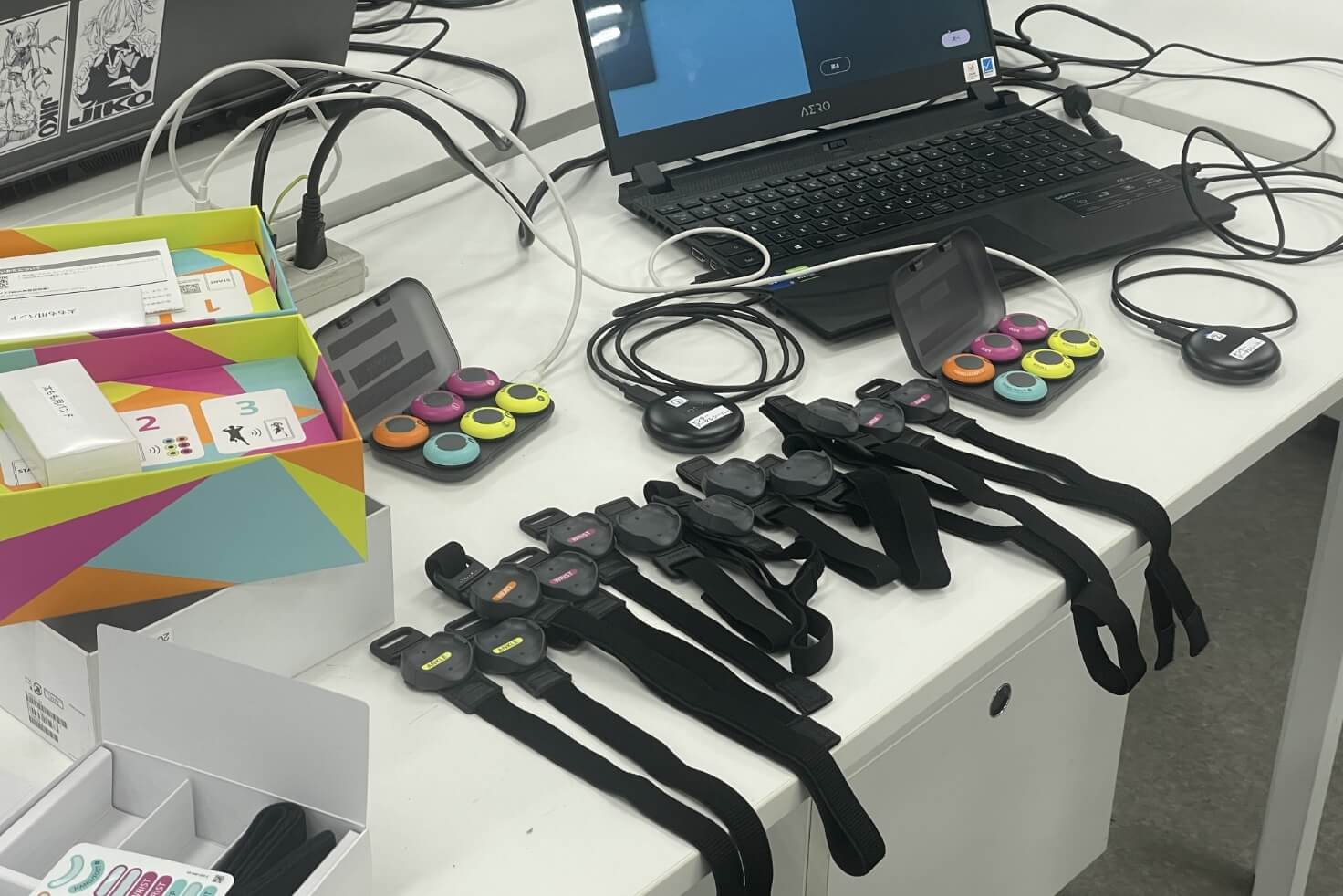
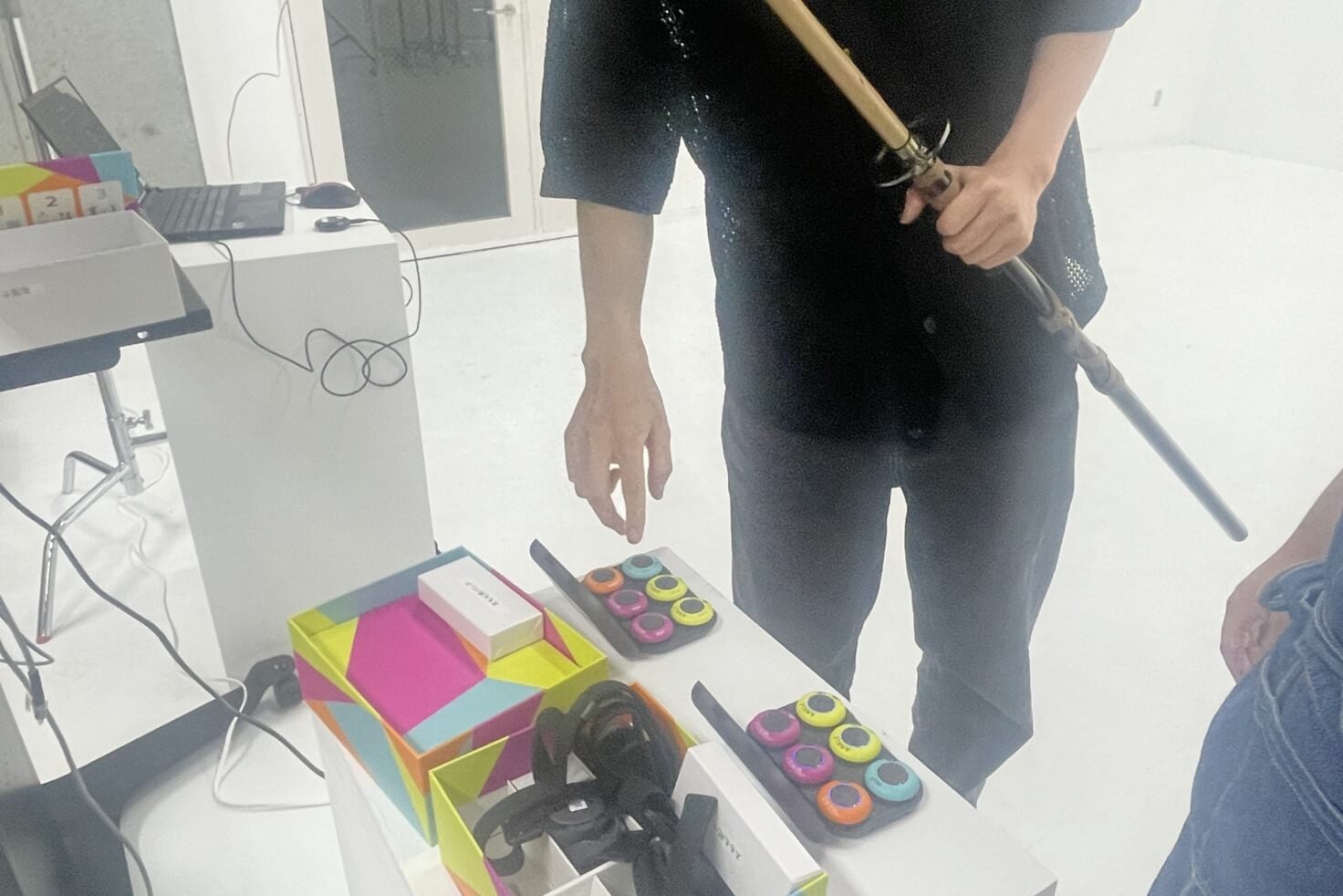
How mocopi is used in actual production
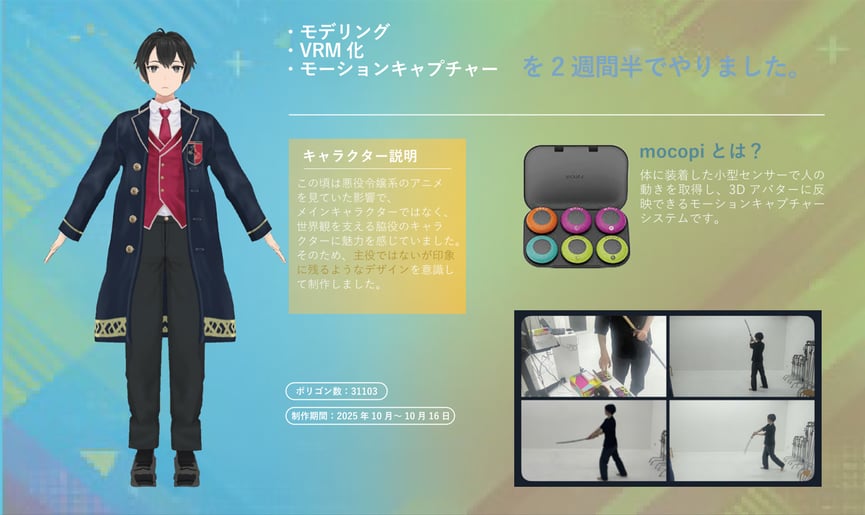
mocopi is used as an everyday production tool, not limited to specific classes or dedicated sessions.
Its primary applications include capturing character motion for game development, as well as use in XR experiential content, interactive works, graduation projects, and exhibition pieces.
Students typically start by recording rough movements, then implement and review them, reshooting as needed.
This “try and refine” cycle can now be completed in a much shorter timeframe compared to working with a traditional studio—representing a fundamental shift in the production workflow itself.
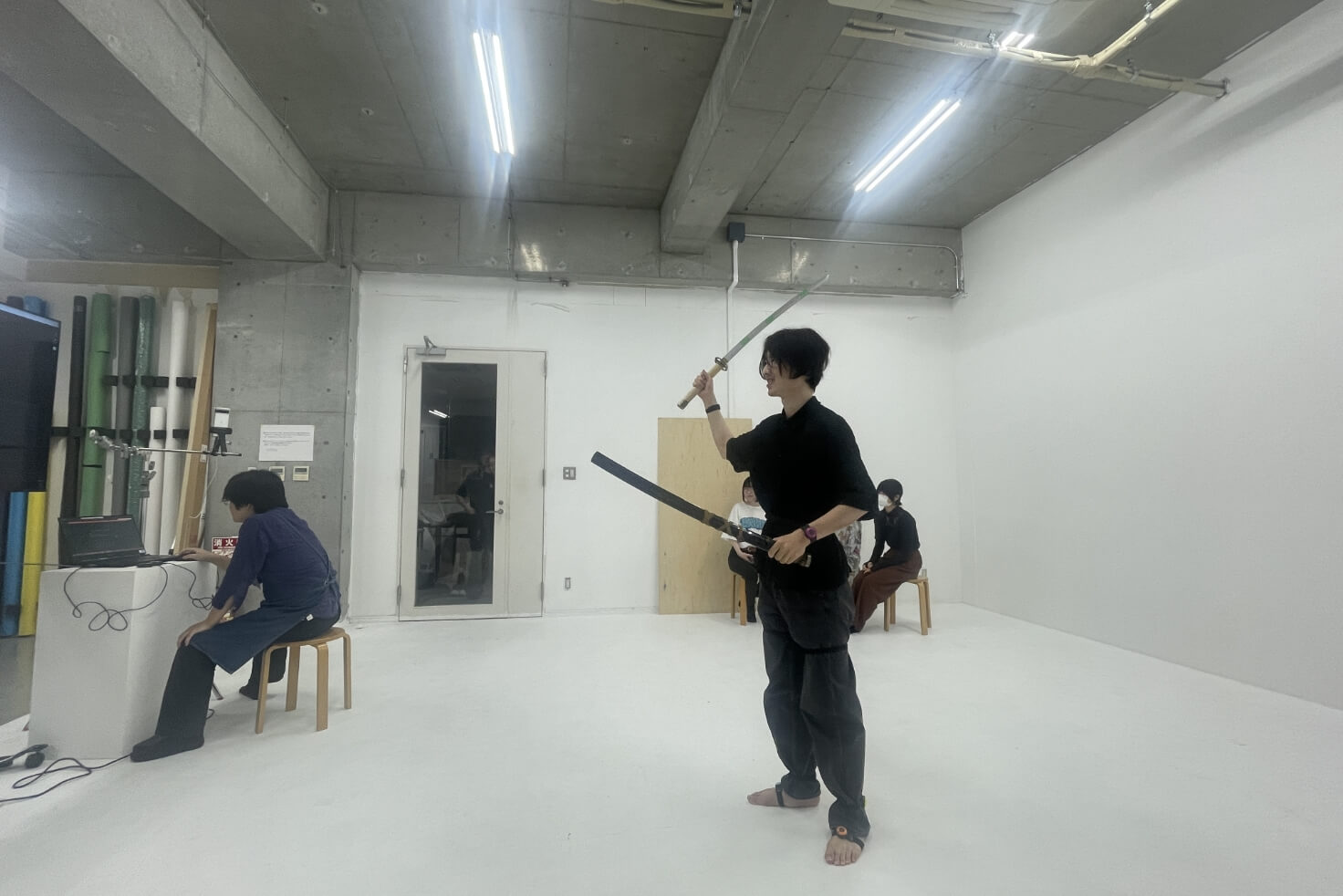
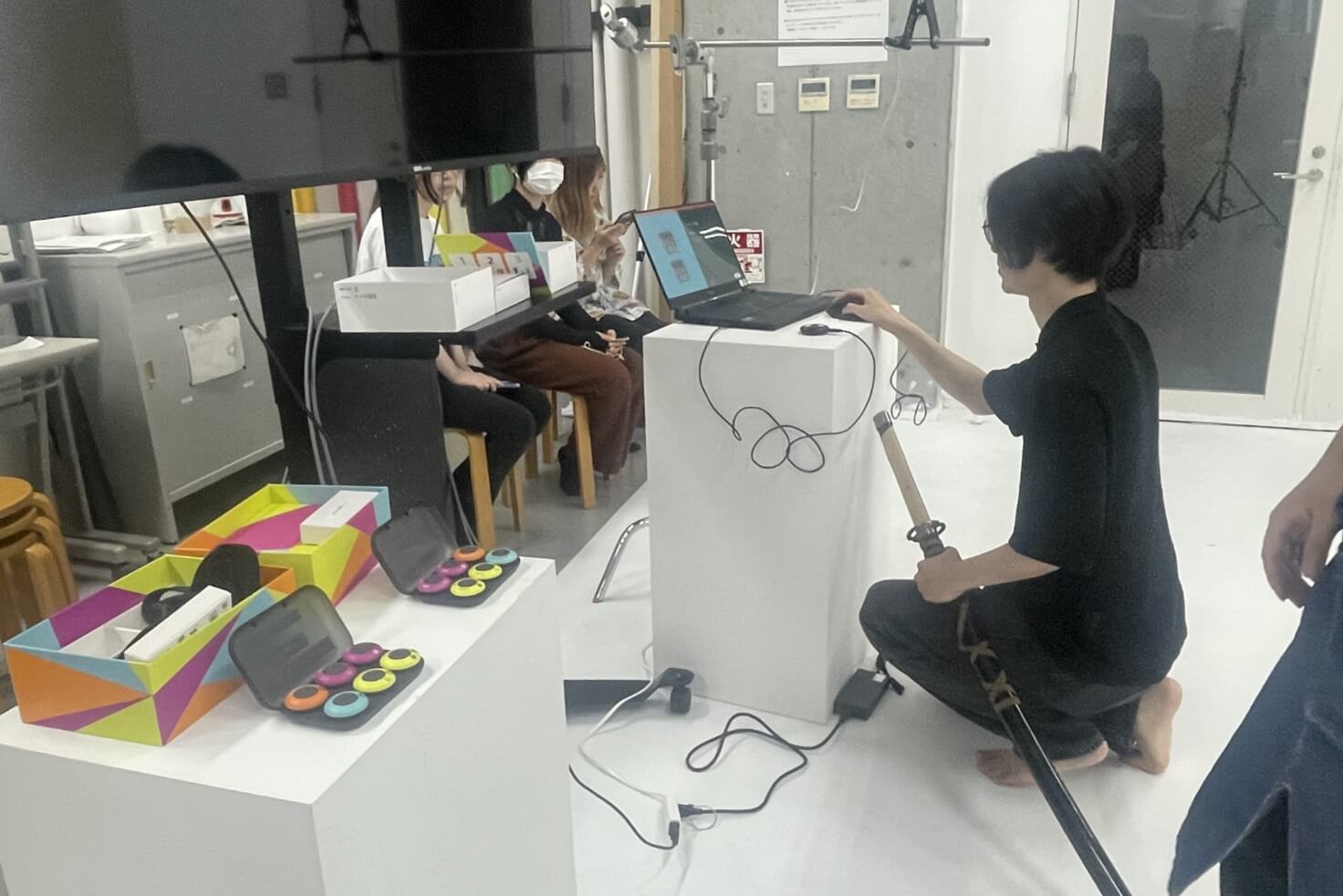
Impact on production efficiency, creativity, and costs
Following the introduction of mocopi, a common sentiment across the production environment has been that motion capture is no longer treated as a special process.
With reduced costs and fewer time constraints, the psychological barrier to using motion capture has been lowered. This has enabled students to experiment more freely with movement and explore a broader range of creative ideas.
Rather than aiming for a perfect one-take performance, students can iteratively refine their work, including incomplete motions, which aligns well with an educational approach that emphasizes trial and error.