









At Hakuten Open Studio 2025, the exhibits explored how display technology can evolve from a tool for visualization into a core element of experiential design. As part of a creative exhibition by Hakuten Corporation, Sony’s Spatial Reality Display (ELF-SR2) and an Eye-sensing Light Field Display (reference exhibit) were used to explore new possibilities for immersive, glasses-free 3D experiences.
Rather than simply presenting content in three dimensions, the exhibition explored how spatial displays—when combined with light, touch, and human movement—can create experiences that feel intuitive, emotional, and deeply real.
This report highlights how Sony’s display technologies are opening new creative possibilities, through insights from the project team: Technical Director Naomi Kuga, Creative Engineer Masaya Ishida, and Designer Kanami Shirogane.
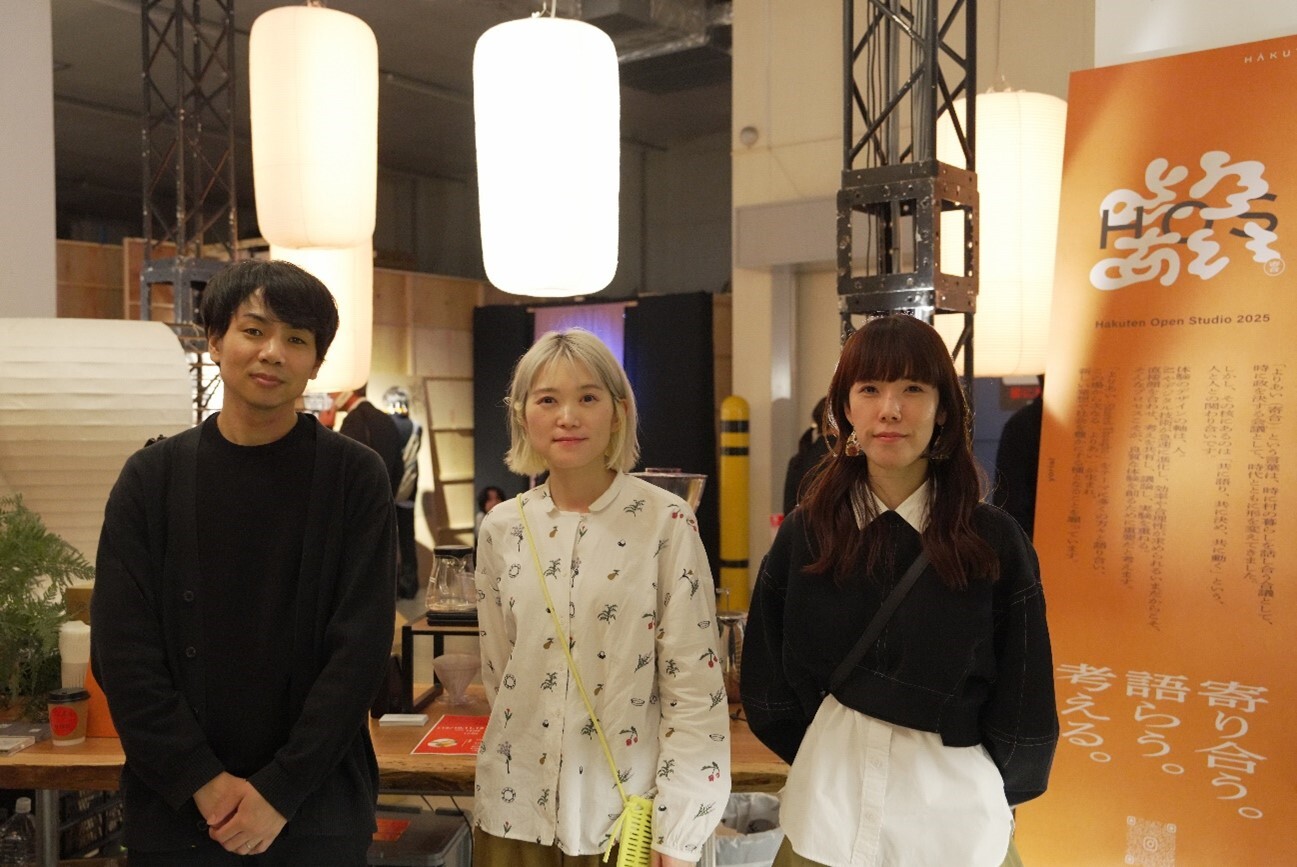
Booth Highlights
Eye-sensing Light Field Display (Reference Exhibit)|Designing an Experience That Dissolves the Sense of a “Monitor”
The Eye-sensing Light Field Display enables glasses-free stereoscopic viewing in a compact, palm-sized form factor. Yet what left the strongest impression was not its size or technical specifications—but the fact that many visitors did not perceive it as a “display” at all.
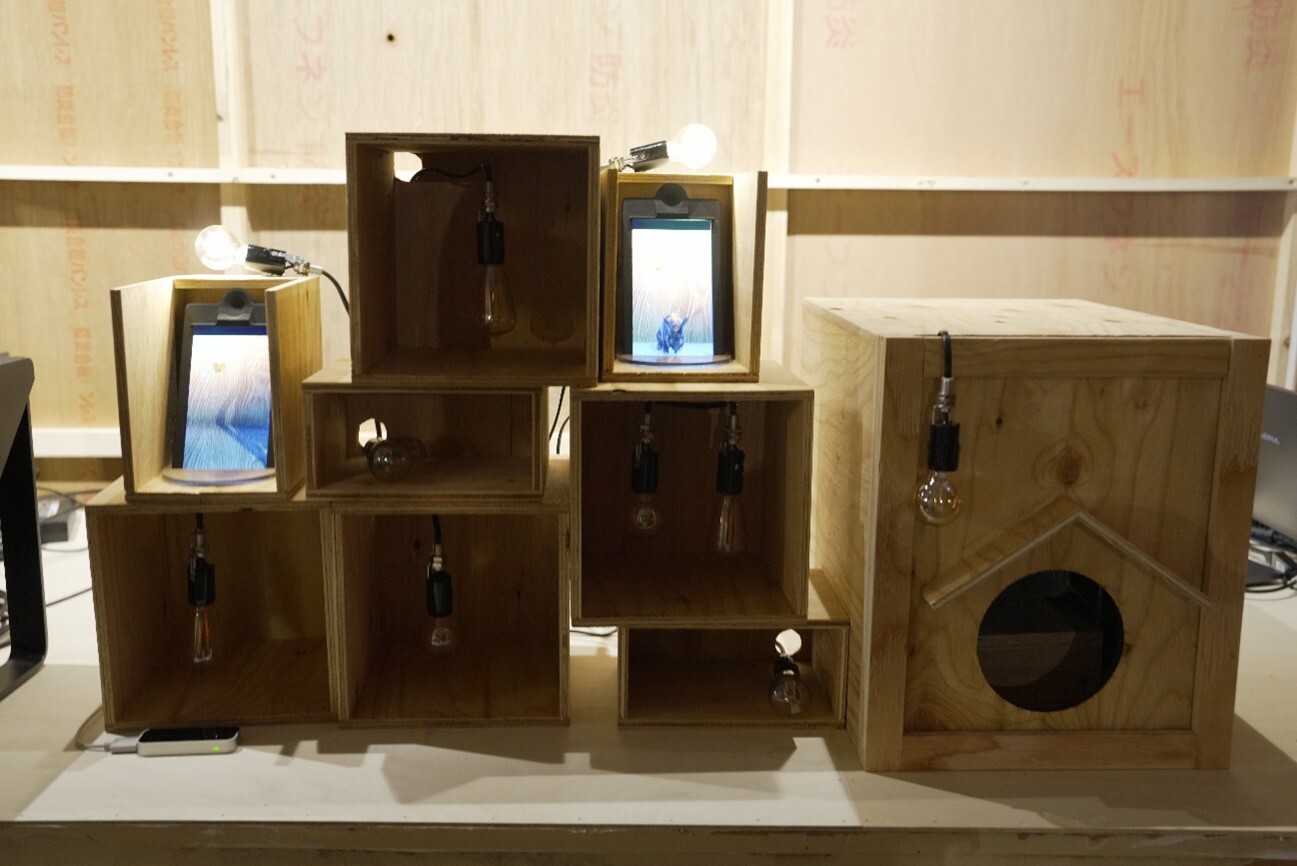
From the outset, the creative team focused on eliminating the sense of a monitor. The moment a display is recognized as a device, immersion is broken. To avoid this, the installation was carefully designed as a single, cohesive space, where structure, lighting, and placement worked together to make images appear as if they naturally existed within the environment.
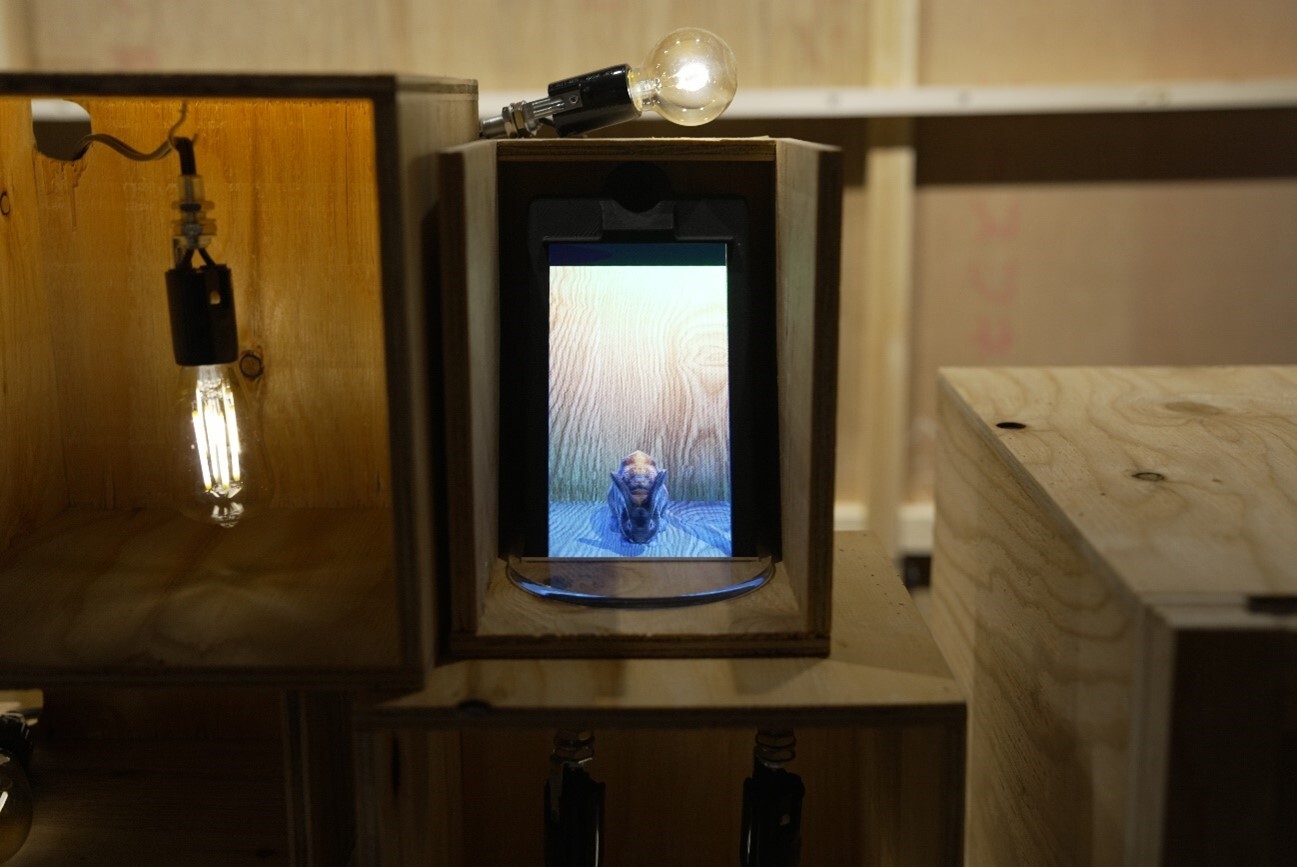
The installation’s theme, “The Rabbit’s Home,” featured multiple stacked wooden boxes with two displays seamlessly embedded inside. As visitors approached, a three-dimensional rabbit appeared and responded to their presence through interactions enhanced by light and haptic feedback.
The rabbit was not perceived as something “on screen,” but as something present—moving naturally within the space and reacting to each visitor’s actions.
Kanami Shirogane, Designer
“If people simply say ‘the 3D looks amazing,’ the experience immediately becomes about the display. From the beginning, we wanted to avoid that. By carefully designing the wooden structures and lighting, we created a sense of realism where the rabbit truly felt like it was right there. The entire space became the artwork.”
An Expanded Experience through Sight, Light, and Touch
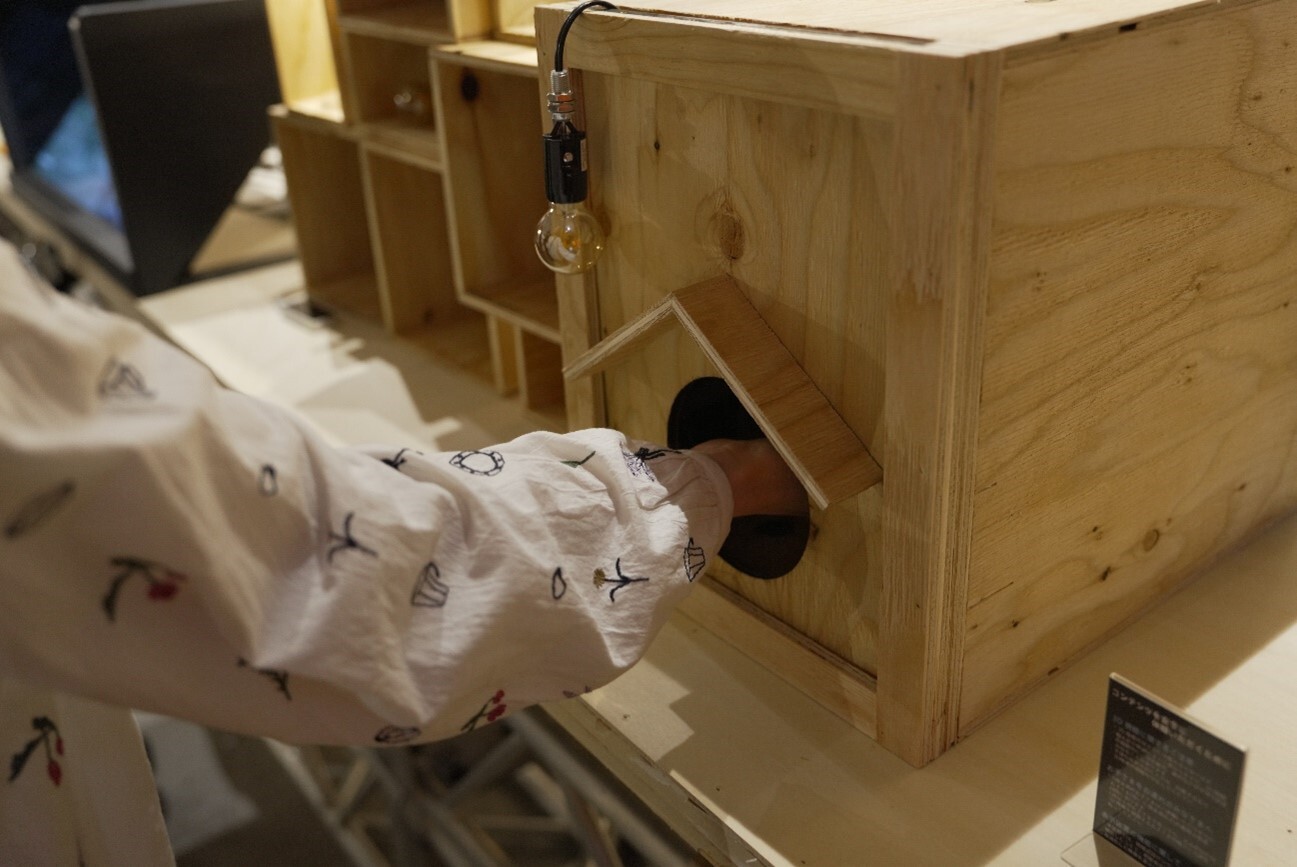
The exhibition expanded beyond visual expression by integrating lighting effects, haptic feedback, and interactions driven by natural body movements—creating a multisensory experience that felt instinctive rather than mechanical.
When visitors placed their hand inside one of the boxes, they could feel the rabbit eating from their palm. Subtle tactile details—suggesting fur, whiskers, and even a slight sense of moisture—were combined with visual cues to create a convincing sense of life and presence.
Interaction was intentionally designed without visible buttons or controls. For example, when a visitor jumped in front of the rabbit, the rabbit jumped in response—turning everyday body movements into the interface itself.
Masaya Ishida, Creative Engineer
“Visible buttons or sensors immediately make people think they’re operating a device. By using sensors built into the display, we wanted interactions to happen naturally—without users feeling like they were ‘controlling’ anything.”
Visitor Reactions|From Visual Surprise to Emotional Connection
Many visitors stopped instinctively upon encountering the installation. Some were so immersed that they initially failed to recognize the rabbit as a digital image.
Others shared deeply emotional reactions, such as recalling rabbits they once lived with. These responses revealed that the experience resonated beyond technological novelty, reaching into memory and emotion.
Naomi Kuga, Technical Director
“What mattered most was that the experience didn’t end with ‘That’s impressive.’ When people said it felt like the rabbit was truly there, we knew we had succeeded. That level of emotional response was only possible because the display itself delivers such high realism.”
Spatial Reality Display(ELF-SR2)|From 3D Visualization to Experiencing Phenomena
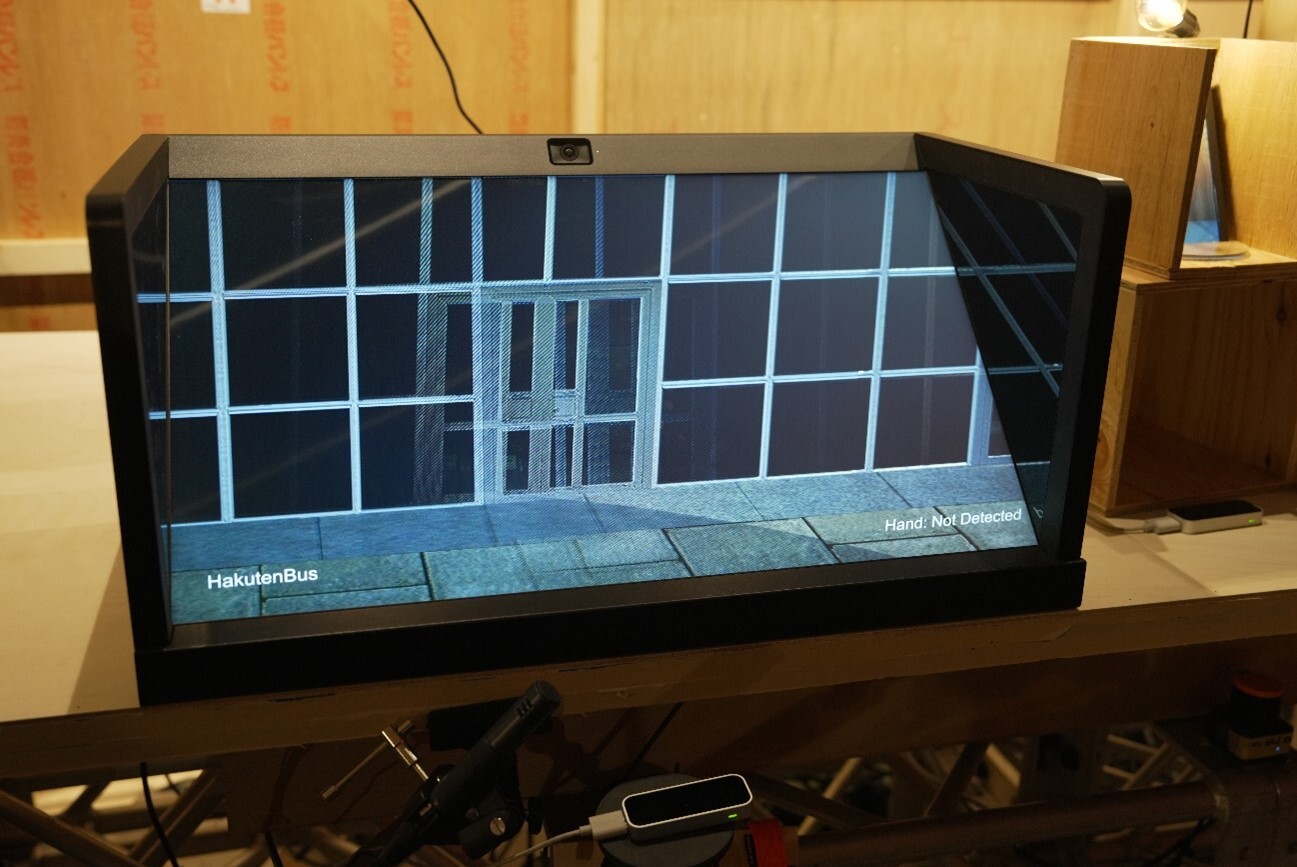
The 27-inch Spatial Reality Display (ELF-SR2) also enables glasses-free stereoscopic viewing. Rather than presenting a conventional 3D demo, this installation explored the idea of allowing visitors to experience phenomena themselves.
Visitors were invited to sit inside a bus, with the display serving as the bus window. Through it, a cityscape unfolded with convincing depth and scale. However, the essence of the experience lay not only in the scenery beyond the window.
When a visitor blew gently toward the display, the window fogged up. In that moment, they realized not only that there was a world “beyond” the window, but also that the window itself existed clearly in the foreground. This realization—that something tangible existed between the viewer and the distant scene—became the core of the experience.
Masaya Ishida, Creative Engineer
“Displays are often used to show something clearly. This time, we wanted to design experiences where something happens. Since many visitors are already familiar with advanced 3D visuals, we focused on connecting their actions directly to visual change—creating an intuitive and memorable experience.”
Visitors first reacted with awe at the glasses-free virtual scenery. Then, as the fogged window appeared, excitement filled the space:
‘There’s a window!’
‘I can write on it!’
‘Look—the droplets are forming!’
Gradually, many visitors settled into the experience, quietly gazing out the window. At some point, the display ceased to be perceived as a monitor and was accepted as a real window—a transformation that powerfully illustrated the potential of spatial display technology.
Shaping the Future of Experiential Design
Through the exhibits at Hakuten Open Studio 2025, spatial displays emerged as more than tools for visual presentation—revealing their potential as foundational elements for immersive, emotional, and human-centered experiences.
Through XYN, Sony will continue to collaborate with creators and partners worldwide to explore new forms of experiential value—across entertainment, brand experiences, exhibitions, and beyond—powered by spatial reproduction technology.
■Project credit
Hakuten Corporation
Creative Engineering: Masaya Ishida
Technical Direction: Naomi Kuga
Art Direction: Kanami Shirogane
Product Management: Mayuka Yamanaka
Production: Fumiya Hashiba
Haptic & Tactile Designer: Yuto Yoshihara
For more information about Hakuten Corporation: https://www.hakuten.co.jp/
■XYN Newsletter
XYN Newsletter Subscribe *Residents of the USA and Canada
■XYN Social Media Accounts